ServicesWhole-Home Filtration
Whole-Home Filtration in Hartland
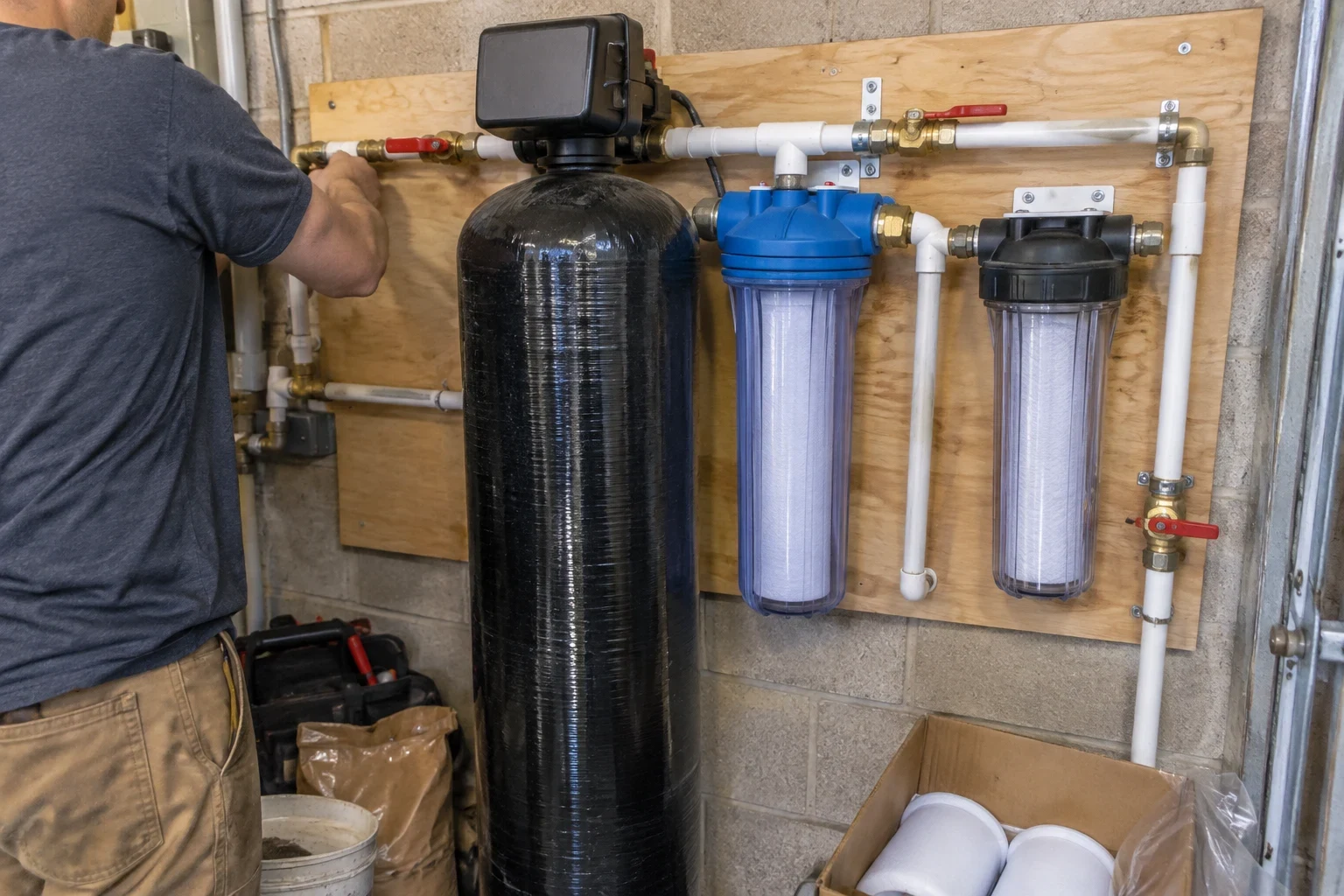
We install sediment and carbon filtration on the main water line, at the point it enters the house, so the kitchen, bathrooms, washer and water heater all share one treated supply. Each system is sized to your peak demand in gallons per minute, which keeps pressure steady while the water is filtered.
How point-of-entry filtration works, and where it stops
A point-of-entry system cleans the water once, on the main pipe, before any branch line carries it to a fixture. Our standard setup uses two stages. The first is a sediment filter that traps sand, rust particles and loose scale. The second is a carbon bed that adsorbs chlorine, chloramine and the organic compounds that cause musty, earthy or chemical tastes and smells.
Carbon has limits, and we say so up front. It leaves calcium and magnesium in the water, so hardness still calls for a water softener. Dissolved iron, manganese and sulfur from a private well need oxidizing media, which is covered on our well water treatment page. When you want drinking water filtered to a finer standard, an under-sink reverse osmosis unit does that job better. After we hear what is going on, we tell you which of these fits your home, and sometimes the answer is none.
What's included in an install
- 01
Sizing to your flow rate
We count bathrooms and fixtures and look at your peak demand in gallons per minute. An undersized carbon tank or cartridge housing chokes flow and shortens contact time, so the water comes out less filtered and at lower pressure.
- 02
Sediment prefilter
A spin-down screen or a 20-inch cartridge housing goes in first. It keeps grit from fouling the carbon bed, which would otherwise wear out early.
- 03
Carbon stage matched to your water
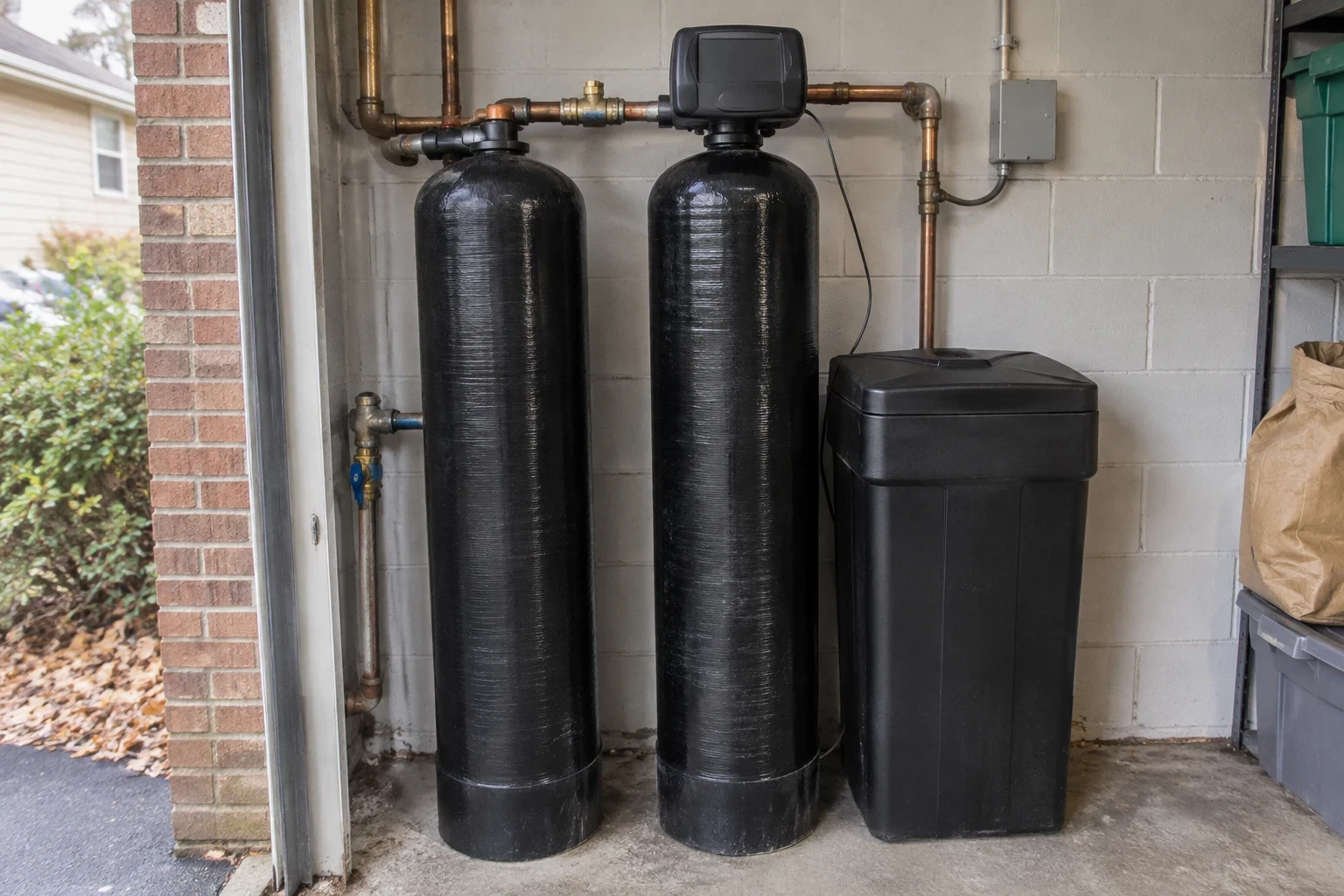
Granular activated carbon works well for free chlorine. If your supply uses chloramine, we use catalytic carbon, because standard carbon removes chloramine slowly and needs far more contact time.
- 04
Bypass valve and outdoor split
Every system gets a bypass so you can service it without shutting off the house. Where the plumbing allows, we keep hose bibs on untreated water so lawn watering doesn't use up filter capacity.
- 05
Drain and power for backwashing tanks
Backwashing carbon tanks need a control valve, an outlet and a drain line run to code with a proper air gap. We set that up and program the backwash schedule before we leave.
Questions about Whole-Home Filtration?
Call(262) 383-4599When whole-home filtration makes sense
Bathroom smells like a pool
Warm shower water lets chlorine escape into the air, so the odor builds up in a closed bathroom. A filter at the kitchen sink does nothing for that room.
Sand or flakes in screens
Debris collecting in faucet aerators, the washer inlet screens or the dishwasher filter means sediment is getting past the main and into valves and cartridges throughout the house.
The same odd taste everywhere
When a musty, earthy or chemical taste turns up at every tap, the cause is in the incoming supply rather than a single faucet or fixture.
Towels fading, skin feeling dry
Chlorine bleaches. Some households see towels and linens wear out sooner, or notice dry skin and hair after bathing.
Cartridges that clog in weeks
A small pleated filter that plugs up fast is undersized for the sediment coming in. It needs a larger housing upstream to carry the load.
From first call to running water
- 1
A call and a free quote
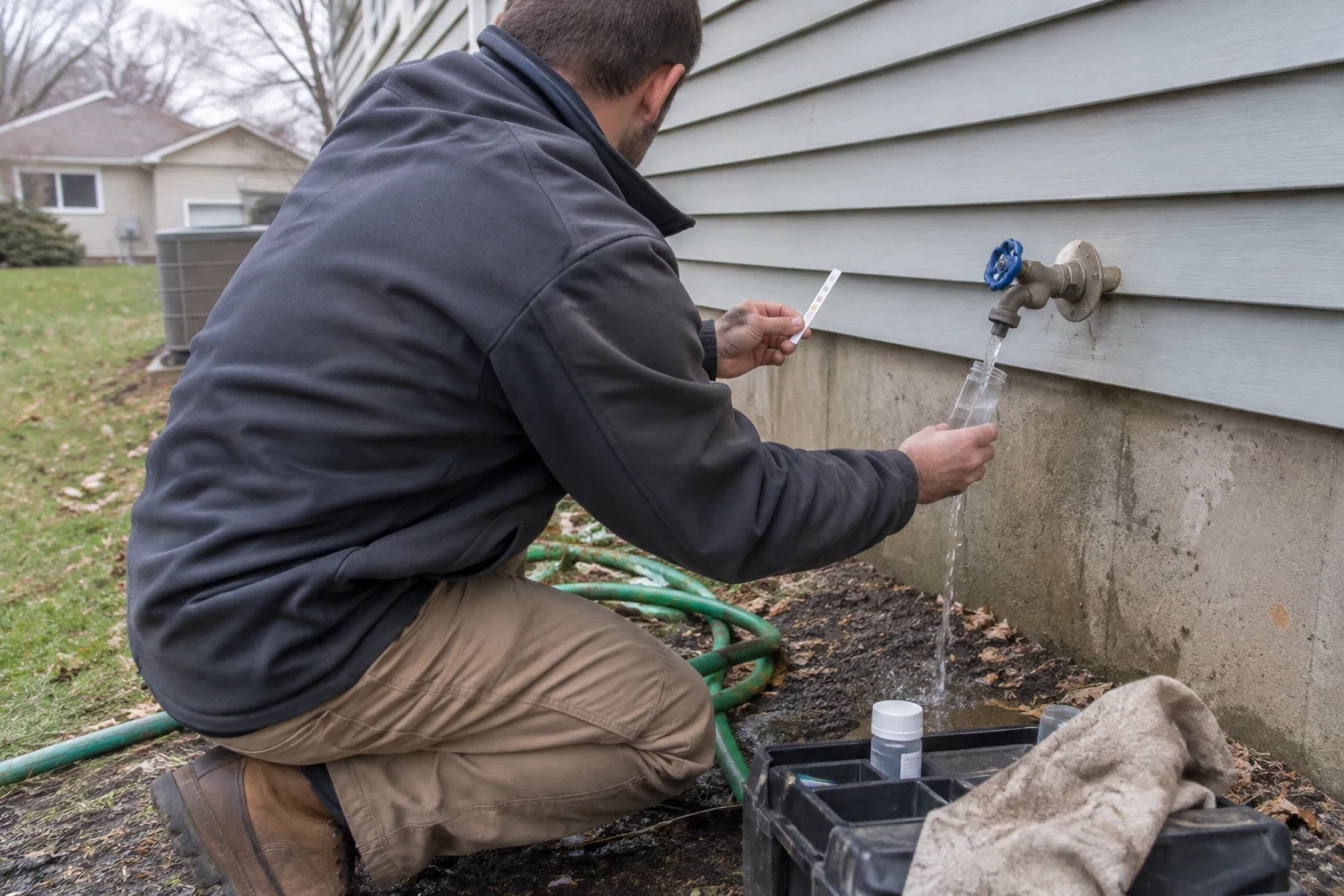
We ask if your water comes from a private well or the municipal supply, how many bathrooms you have, and what you have been seeing or smelling. A recent lab or utility report helps if you have one. The quote is free and stays good for 30 days.
- 2
Checking where the water comes in
We locate the main, note the pipe size and material, and confirm there is room, a drain and an outlet nearby. On a well, the filter goes downstream of the pressure tank. In most homes it lands before the softener and the water heater.
- 3
The installation
Floor coverings go down first in the basement or utility room. Then we close the main valve, plumb in a bypass and set the filter housings or tank. Water is usually off for only part of the day. Since a Hartland winter can freeze an exposed line, we keep the equipment and drain run inside heated space.
- 4
Flushing and handoff
We rinse out loose carbon fines, check every joint for leaks, confirm pressure and program any backwash timer. You see how the bypass works and when media or cartridges are due. Full payment is collected once the install is finished.
What sets the price of a whole-home system
Whole-home filtration has no one-size price. The total depends on how much water your home moves at peak, what is in it, and how easy your main line is to reach. We walk through each of those on the phone and put every line in a written quote. Financing through U.S. Bank Avvance is an option, on approved credit. You also have three business days to cancel after you sign.
- Cartridges versus a backwashing tank
- A cartridge housing is cheaper to install but needs new filters on a regular schedule. A backwashing tank costs more on day one and runs far longer before the media is replaced.
- Carbon grade and media volume
- Catalytic carbon, used where the supply carries chloramine, costs more than standard granular carbon. Homes with more bathrooms need a bigger bed to hold enough contact time when several fixtures run at once.
- Reaching the main line
- An unfinished basement with a floor drain close by keeps labor low. Drywall ceilings, cramped utility closets or a long drain run add time.
- Existing pipe
- Copper, PEX and galvanized steel each need their own fittings. Old galvanized pipe sometimes needs a short length replaced so the new joints seal and stay sealed.
- Combining equipment in one visit
- Adding a softener or an RO unit during the same appointment generally takes less labor than separate trips, since the main is already open.
Whole-home filtration questions
Will a whole-house filter lower my water pressure?
It shouldn't if the system is sized correctly. Pressure drop comes from housings or tanks that are too small for your peak flow, or from cartridges left in too long. We size for the moment two showers and the washer are running together.
Do I still need a water softener?
Carbon and sediment filters don't remove hardness minerals. Groundwater around Hartland and the nearby lake country is often hard, so many homes run both. The filter usually goes first, which also protects the softener resin from chlorine.
How often does the media need changing?
Cartridges are typically changed every few months, depending on your sediment load and water use. Backwashing carbon tanks go years between media changes because the backwash cycle cleans and reclassifies the bed. We give you a schedule based on your system and household.
Is this enough for my drinking water?
For taste and odor at every tap, yes. If you want drinking water held to a tighter standard, a reverse osmosis unit at the kitchen sink adds a finer membrane stage, and it works best with whole-home filtration ahead of it.
Can I use it on a private well?
Yes, for sediment and taste issues. If your well has iron staining, rotten-egg odor or manganese, plain carbon won't keep up, and well water treatment is the right page to start with.
Talk through your water and your options
Tell us about your water source and what you're noticing, and we'll explain which setup fits your home. We can also go over the Avvance financing terms on the same call.