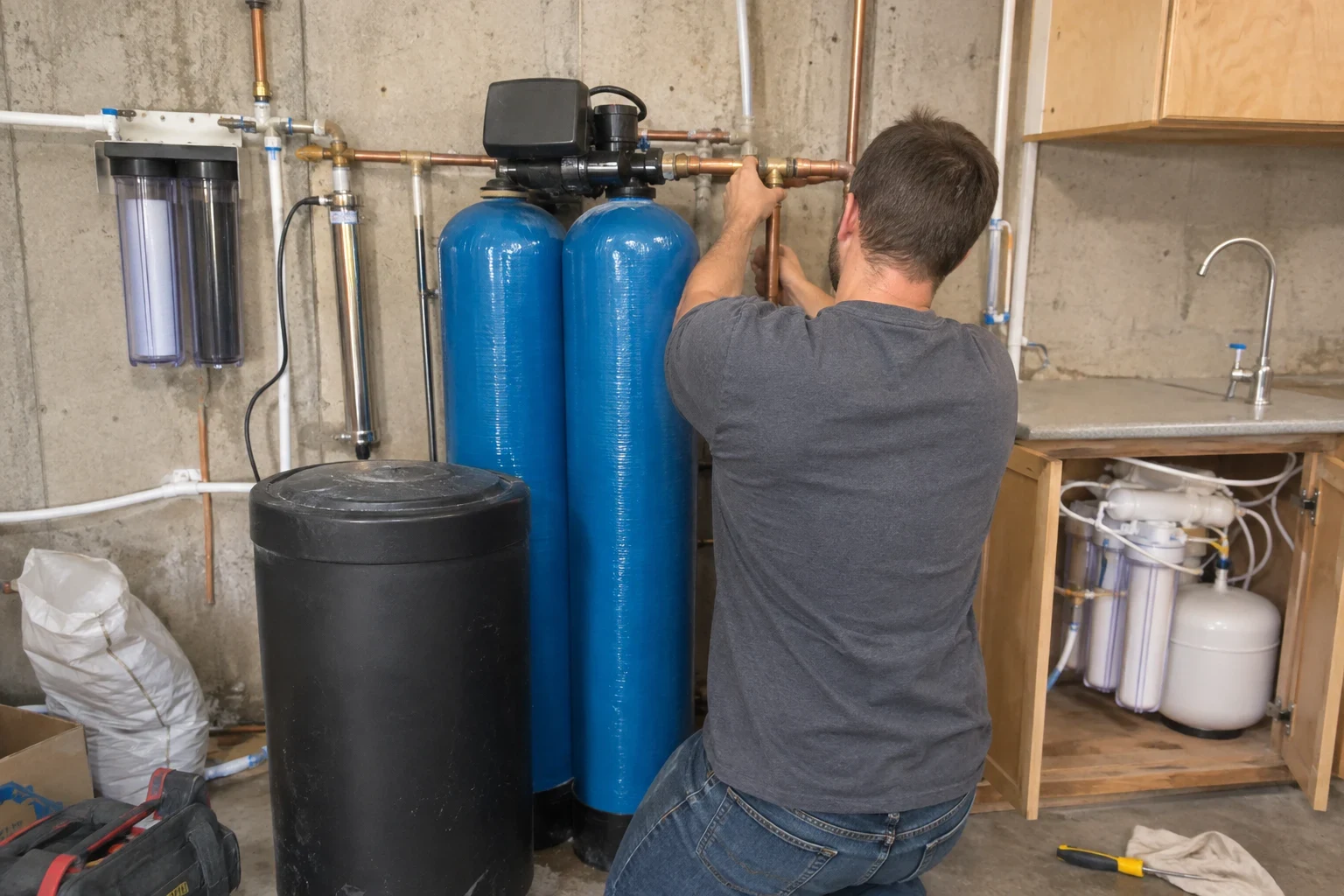
Hartland, WI
Hartland Water Softeners and Filters, Sized for Hard Well and City Water
We install water softeners, under-sink reverse osmosis, whole-home carbon filtration and well water treatment in your home. Each system is sized to your hardness, iron and household use, and plumbed into the space you have. We work in Hartland and nearby towns like Pewaukee, Delafield and Merton.
- Free quotes by phone
- Financing on approved credit
- Quotes hold 30 days
- Pay when the install is done
Why Hartland Homeowners Call Us
We match each system to the water it will treat and the plumbing it will sit on. Here is what that looks like on a real job.
- Plumbing done to state code
- A licensed Wisconsin plumber installs every system we sell. That includes the bypass valve, a drain line with a proper air gap and the tie-in to your main, made with solid joints rather than push fittings and guesswork.
- Warranty terms in plain words
- The RO unit itself is covered for 1 year; filters are excluded because they wear out and get replaced on a schedule. Your original install also carries a 1 year labor warranty, so a fitting of ours that starts to weep in that first year gets fixed.
- Sized from your numbers, not a sales chart
- Undersize a softener and it cycles through regeneration over and over, burning through salt. Oversize it and water channels through the resin while most of the bed does nothing. We start from your hardness and iron figures, household size and peak flow, then pick the grain capacity and valve that fit.
- Built for a basement that gets cold
- Brine and drain lines get routed so they do not sag or freeze along an outside wall in January, and the brine tank stays off cold slab spots where salt tends to bridge. Details like these keep a system working through a Wisconsin winter.
- Straight answers on what you need
- If chlorine taste is the whole problem, a carbon filter handles it and you will not hear a softener pitch from us. If an RO unit at the sink covers your concern, we leave it there.
Water Treatment Systems We Install
Most groundwater in this part of Waukesha County picks up calcium, magnesium and often iron as it moves through limestone and dolomite, which is why scale and orange staining show up so often. A water softener handles the hardness through ion exchange in a resin tank. Reverse osmosis pushes drinking water through a semipermeable membrane for the kitchen tap, and whole-home filtration uses activated carbon to take out chlorine taste and odor at the point of entry. If your home is on a private well, our well water treatment covers iron, manganese and the rotten-egg smell from hydrogen sulfide.
Water Softeners
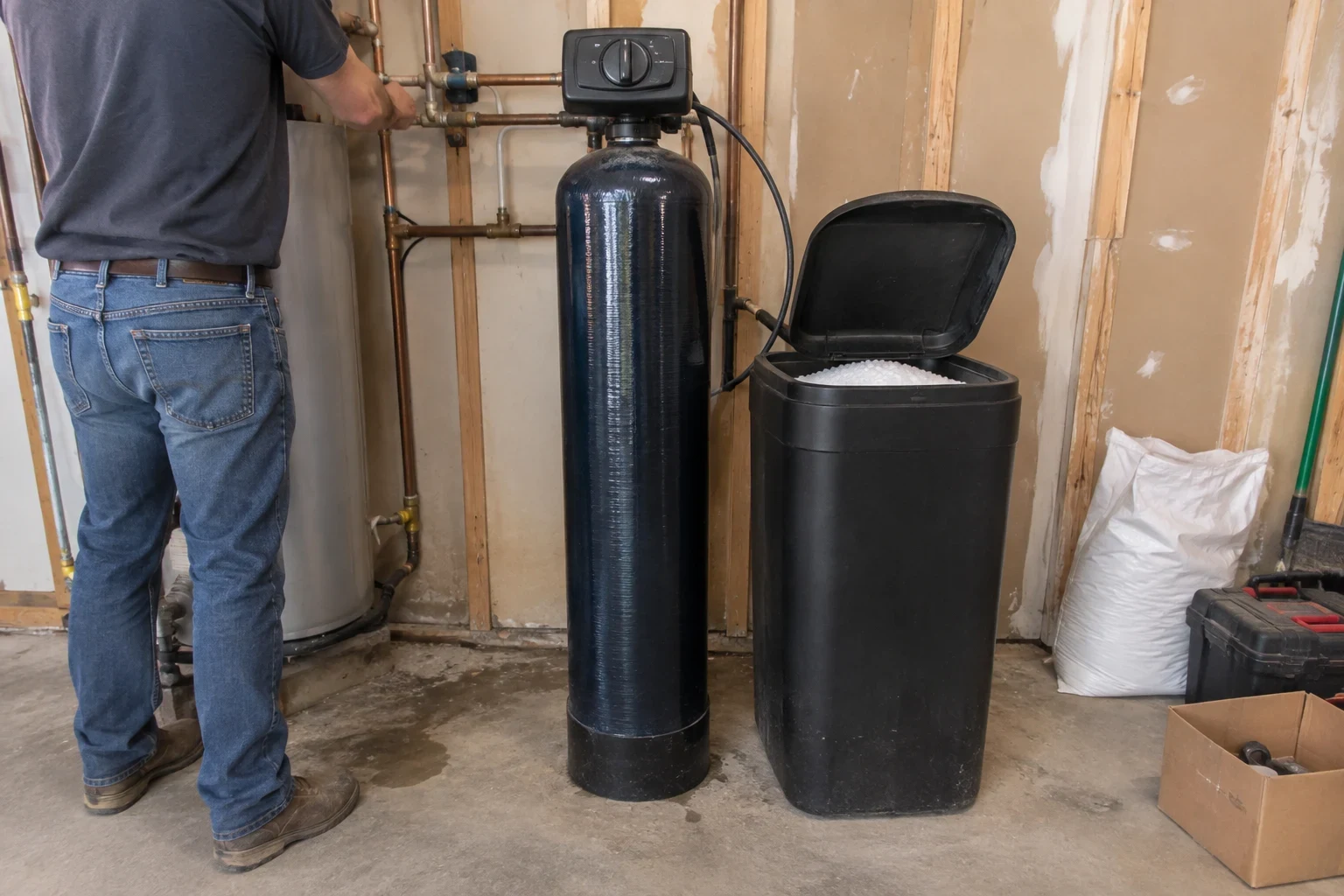
Metered softeners sized from your hardness and iron numbers, plumbed in at the main with a bypass loop and a proper air gap drain.
Reverse Osmosis
An under-sink reverse osmosis system that strips dissolved minerals, lead and nitrates from the water you drink and cook with, fed to its own faucet.
Whole-Home Filtration
Sediment and carbon filtration on your main water line, so every tap, shower and appliance in your home gets cleaner water.
Well Water Treatment
Iron filters, sulfur removal, softening and UV for private wells, set up in the right order and sized to what your pump can actually deliver.
Where We Work
Our installs happen in Hartland and the Lake Country towns around it: Pewaukee, Sussex, Lisbon, Delafield, Okauchee Lake and Merton. We also travel to Waukesha, Oconomowoc, Genesee and Summit. Some homes in these towns draw from a private well and others from a municipal system, and we set up treatment for both.
- Hartland
- Pewaukee
- Sussex
- Lisbon
- Delafield
- Okauchee Lake
- Merton
- Waukesha
- Oconomowoc
- Genesee
- Summit
If your home sits a little beyond these towns, give us your address when you call. We will check it against our install schedule and tell you plainly if we can take the job.

About Water Softener Hartland
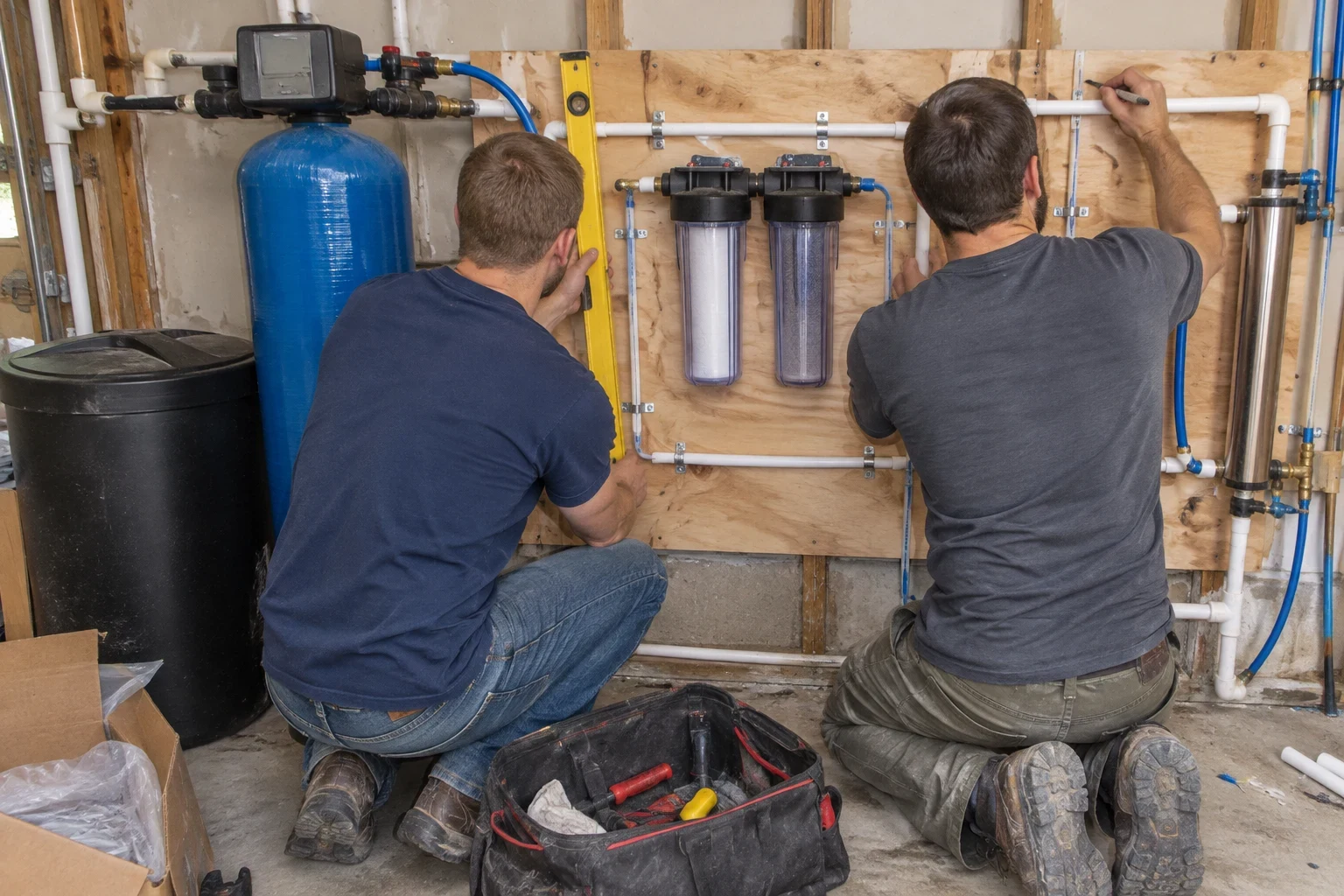
We are a local water treatment company that does one thing: put the right softener or filter on the water coming into your home. Around here that usually means hard water, often with iron, and plenty of homes on private wells alongside those on village systems.
We would rather explain why a part is there than just list it. You will hear why a fine-mesh resin handles iron better than standard resin, why a carbon filter goes before a softener and not after, and why an RO membrane needs softened water to last. When you know how the system works, you can keep it running and spot a problem early.
- License
- Installed by a licensed Wisconsin plumber
- Warranty
- 1 year on the RO unit, filters excluded; 1 year labor warranty on the original install
How an Install Runs
Every job follows the same order. At each step you know what comes next.
- 1
Talk through your water
Tell us what you notice: scale on fixtures, rust stains, a sulfur smell or a chlorine taste. Keep any lab results or a recent hardness number nearby, and let us know if your home draws from a private well or a village system.
- 2
Look at the space
We check where the main enters, where the drain and outlets sit, and what shape the pipe is in at the point we would tie in.
- 3
Get your quote
The quote names the equipment and spells out the work. It stays good for 30 days, and if you sign and then reconsider, a three-business-day window lets you cancel.
- 4
Install day
We shut off the water, cut in a bypass valve, set the tanks, run the drain line with an air gap and program the control valve for your hardness and usage. Then we flush the system, check each joint for drips and show you how to add salt or swap filters.
- 5
Payment at completion
Payment in full happens once the system is in and running, or through financing if you arranged it ahead of time.
What Moves the Price of a System
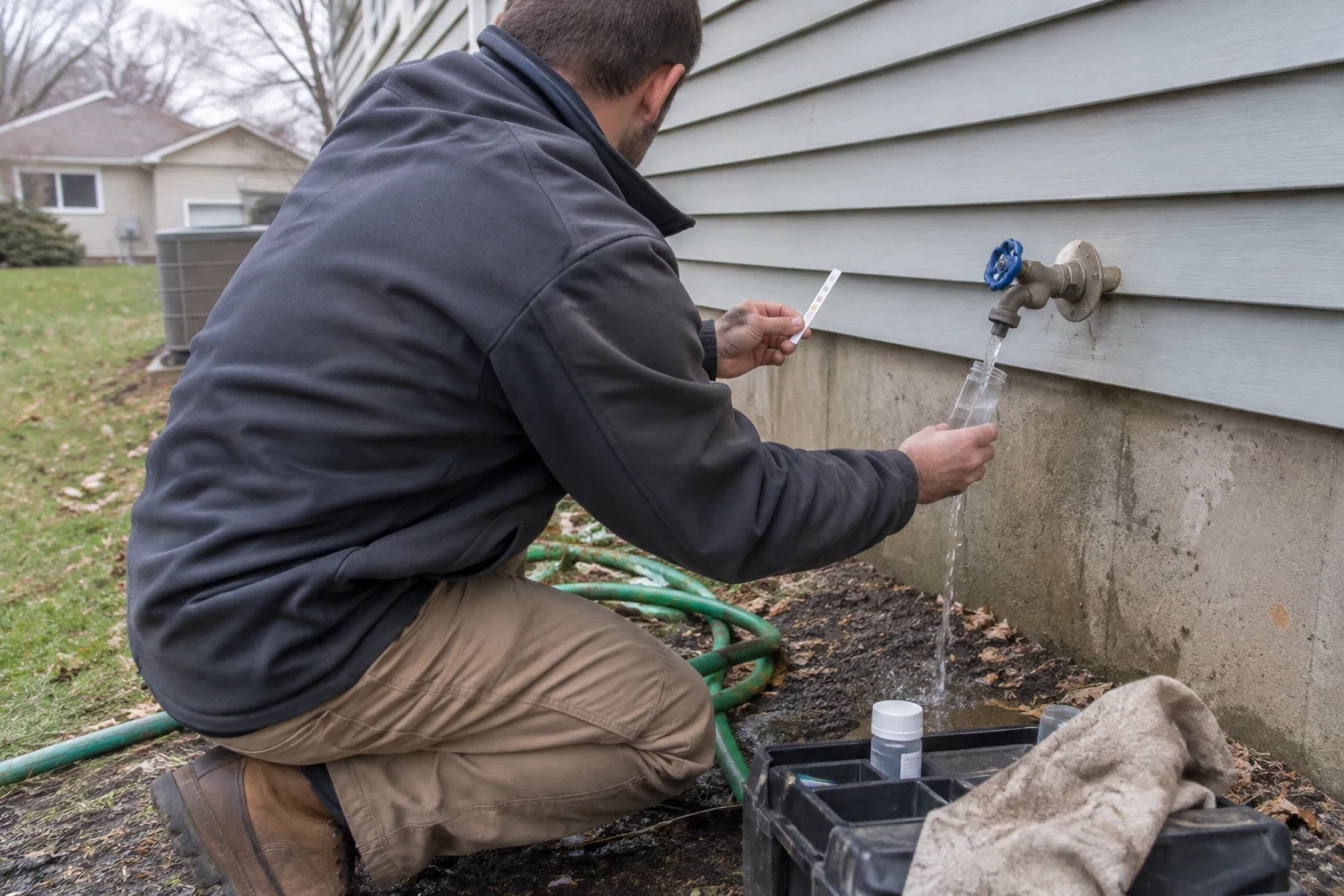
Installs vary in cost because the water and the mechanical room differ from one home to the next. The factors below shift a quote more than anything else. Each one gets explained to you before you sign.
We give your quote free, by phone, once we know your water and your space, and the number stays good for 30 days. You can finance through U.S. Bank Avvance, on approved credit, and full payment comes due at the completion of the install.
- Type and capacity of equipment
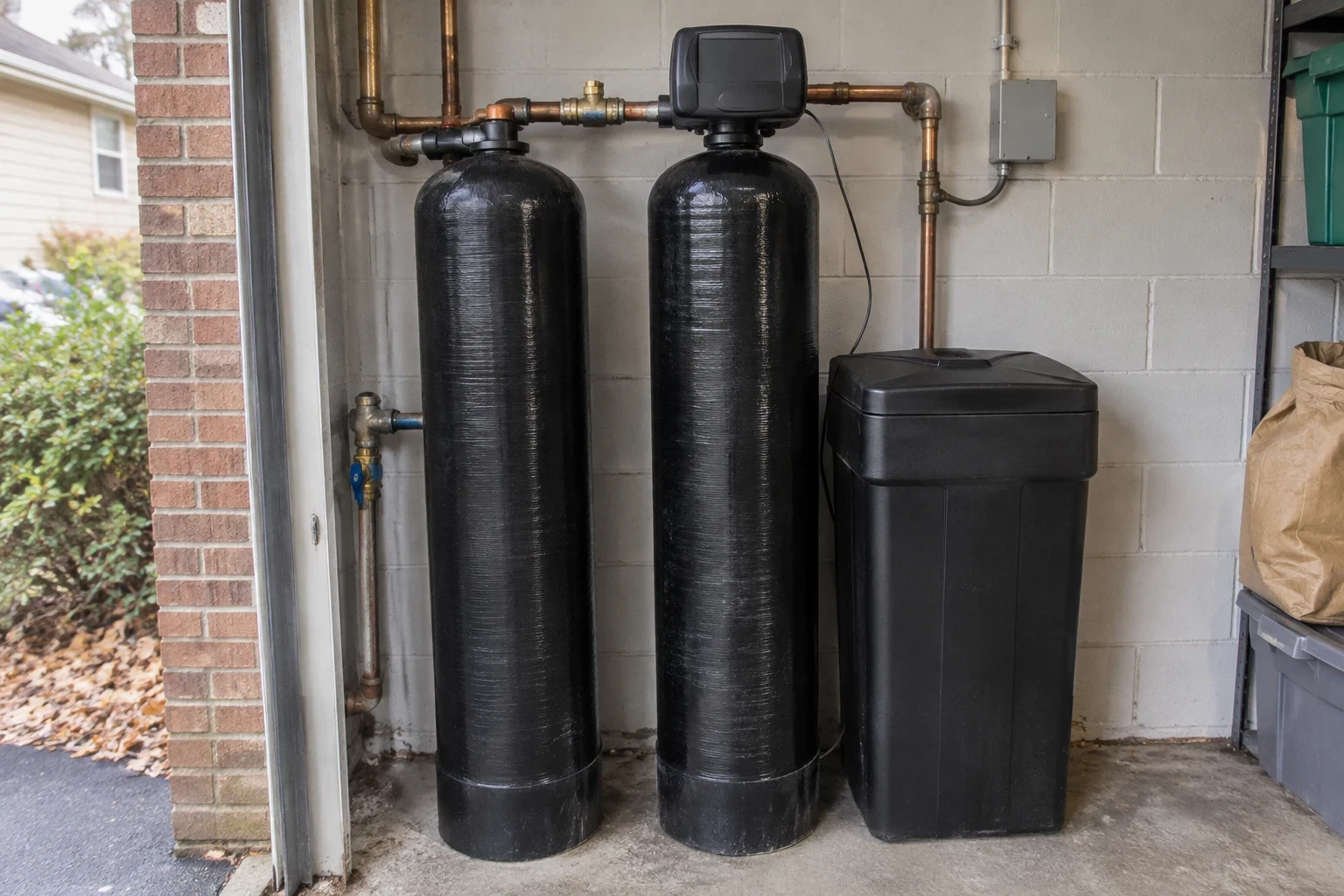
- An under-sink RO unit is a smaller job than a twin-tank softener, or a softener paired with an iron filter. Grain capacity, tank size and valve type all scale with your water and the number of people using it.
- What is in your water
- High iron, manganese or hydrogen sulfide may call for an oxidizing filter or an air-injection system ahead of the softener. Plain hardness is simpler and less costly to treat.
- Plumbing access and layout
- How far the floor drain sits, whether an outlet is near for the control valve, and how much room there is to cut in a bypass loop all change labor time. A finished basement or a crowded utility corner takes longer than an open mechanical room.
- Condition of existing pipes
- Old galvanized steel or corroded copper near the main may need replacing at the tie-in so the new connection holds. You hear about what we find before we cut into it.
- Removing an old unit
- Draining a failed softener and hauling off the tank and spent resin adds some time to install day.
Questions Homeowners Ask Us
Do I really need a water softener?
Most groundwater in this area is hard enough to leave white scale on faucets, glass shower doors and the inside of your water heater. If you see that crust, or soap barely lathers, a softener usually helps. If taste or smell is your only complaint, a carbon filter or RO unit may suit you better, and we will say so.
My well water stains everything orange. Will a softener fix that?
A softener can take out small amounts of dissolved iron, but heavier iron, manganese or a sulfur smell need dedicated well water treatment in front of it. An oxidizing filter turns dissolved iron into particles and backwashes them away. That step also keeps the softener resin from fouling.
What does reverse osmosis remove that a softener does not?
A softener trades hardness minerals for sodium or potassium and leaves most other dissolved solids in place. An RO membrane strips out a broad range of dissolved solids, including sodium and lead that older plumbing can add. That is why many homeowners run a softener for the whole house and RO at the kitchen sink.
How much salt will a softener use?
That depends on your hardness and how much water your home goes through. We install a demand-initiated valve, which regenerates after a measured number of gallons rather than on a fixed timer. Compared with older timer units, it uses less salt and sends less water down the drain.
What warranty comes with the equipment?
Tanks, the valve's ceramic discs and dry mechanical parts carry lifetime coverage. On the phone we can go through what that means for the specific system you are weighing.
Can I spread out the cost?
Yes. U.S. Bank Avvance offers financing, on approved credit. If you prefer to pay outright, nothing is owed until the install is complete. Either route can be talked through by phone.
What if I change my mind after signing?
Signing does not lock you in right away. You get three business days afterward to cancel. Before that, your quote stays valid for 30 days, so there is no rush to decide.
Find Out What Your System Would Cost
Describe what your water is doing and the space where the equipment would go, and you get a free quote over the phone. Financing through U.S. Bank Avvance can be covered on that same call.