ServicesWell Water Treatment
Well Water Treatment in Hartland, WI
Orange stains, a rotten-egg smell or grit in the aerators usually trace back to what your well is pulling up. We match the treatment to those causes, install it after your pressure tank and set the equipment so it keeps up with your pump.
Treating water that comes straight from your well
A private well delivers water exactly as the ground gives it. Nothing has been filtered, softened or disinfected before it reaches your pressure tank, so whatever is dissolved in it goes into your water heater, your fixtures and your glass.
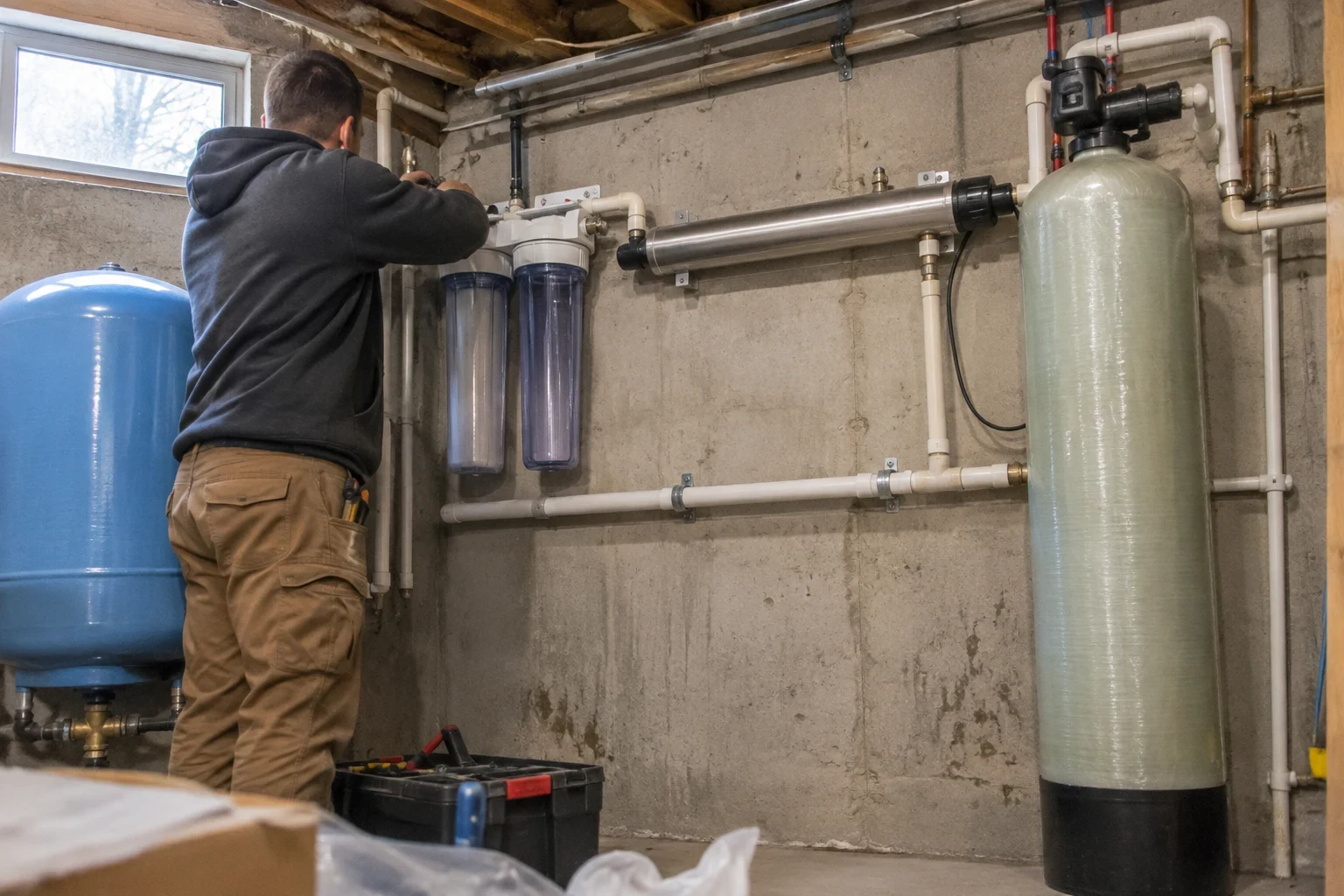
Well water in this part of Wisconsin often runs hard and can carry dissolved iron, and some wells add hydrogen sulfide on top. Each problem needs its own stage, and the order matters. Sediment comes out first so it does not clog what follows. Iron and sulfur come out next so they do not foul softener resin. Disinfection goes last, because UV light only works through clear water.
We look at what your water is doing, what your pump can deliver and how your basement is laid out, then recommend only the stages you need.
What a well treatment system can include
Sediment prefiltration
A spin-down screen or cartridge housing stops sand and grit coming up from the well before they reach control valves and media beds. It shields every stage after it and costs the least to maintain.
Iron and sulfur filtration
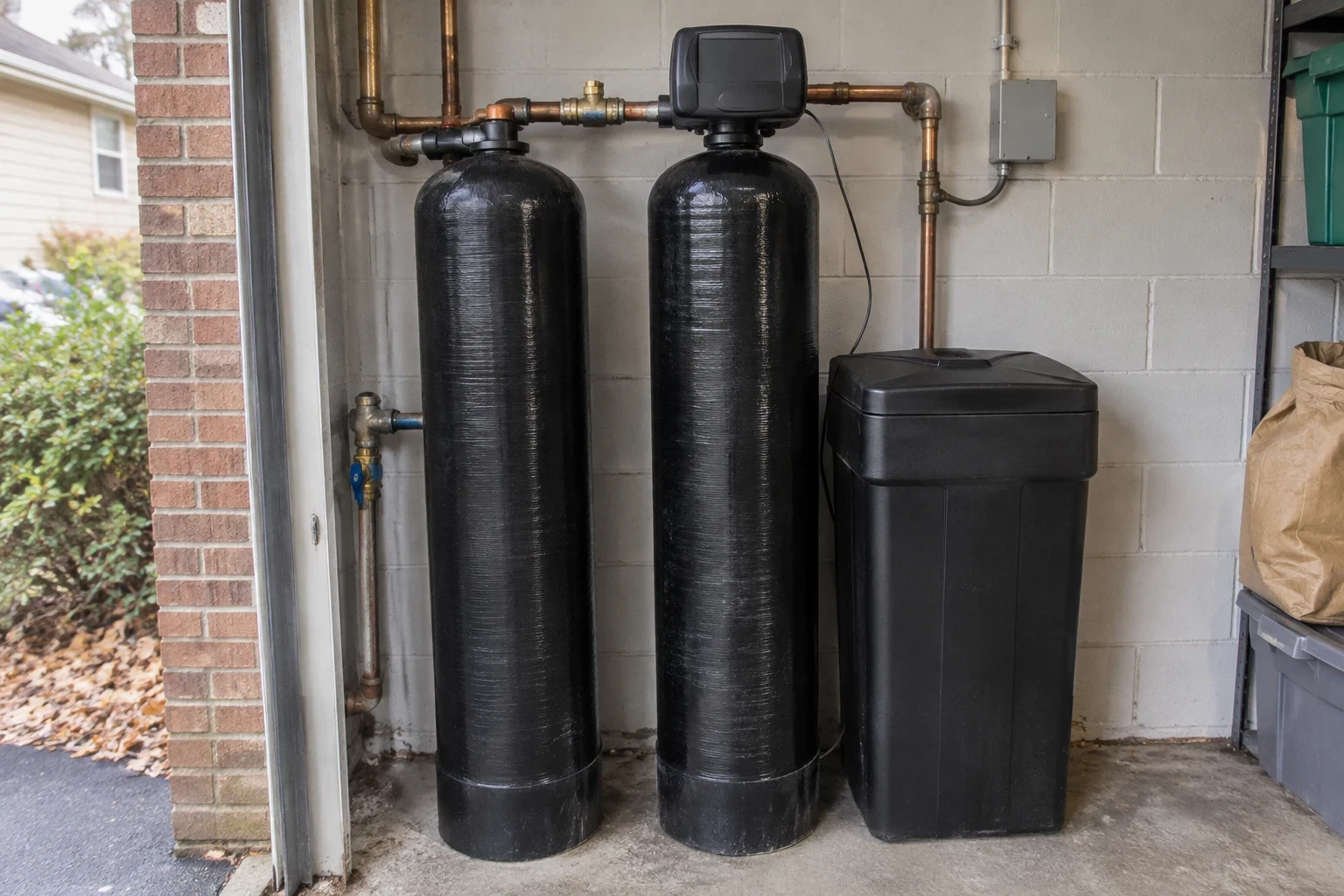
An air-injection filter keeps an air head inside the tank. As water moves through it, dissolved iron and hydrogen sulfide oxidize into solid particles, the media bed traps them, and a scheduled backwash flushes them out to the drain.
Softening sized for well water
Softener resin pulls out calcium and magnesium and can also take up small amounts of dissolved iron. We size it for your hardness plus whatever iron makes it past the filter, so the resin regenerates often enough to stay clean. Our Water Softeners page explains sizing and salt use.
UV disinfection
A UV chamber treats water for bacteria with light instead of chemicals. It needs an outlet and a quartz sleeve kept clear, so it goes in after the filters.
Drinking water at the kitchen sink
An under-sink unit gives cooking and drinking water a final polish. The Reverse Osmosis page covers what it removes and how the storage tank and faucet go in.
Plumbing done right
Each system gets a bypass valve so your home keeps water during service, a drain line with a proper air gap, and any permit the job calls for.
What your well water may be telling you
Rust rings and yellowed laundry
Orange or brown marks in toilets, sinks and the dishwasher come from dissolved iron that oxidizes on contact with air. Bleach won't remove it, and white clothes can turn yellow.
Rotten-egg smell
Hydrogen sulfide gives off a sulfur odor, usually strongest at the hot tap. A magnesium anode rod in the water heater can make it worse by reacting with sulfate in the water.
Slimy red buildup in the toilet tank
A gel-like reddish film is usually iron bacteria. It feeds on dissolved iron, plugs screens and comes back soon after cleaning.
Grit and white scale
Sand in faucet aerators means sediment is getting past the pump. Crusty white scale on showerheads and a rumbling water heater point to hardness.
A softener that keeps failing
If your softener cycles but the water still feels hard or leaves stains, iron has likely fouled the resin. Putting iron filtration in front of it usually fixes the real problem.
How a well treatment job goes
- 1
A phone call first
Describe what you are noticing and how long it has been going on. If you already have a lab report on your well, keep it close by. Financing questions can be answered on the same call.
- 2
A look at your equipment
We check the pressure tank, the pump's flow rate and the room around it. Backwashing filters need a minimum flow to lift and clean their media, so a low-output pump changes which filter we recommend.
- 3
A written quote
Every stage is listed with what it does and why it is there. Your price stays good for 30 days, and once you sign, you still have three business days to change your mind.
- 4
Install day
Your supply stays off while we tie the new equipment into the line downstream of the pressure tank and hook up the drain and power. Before the taps open again, the tanks are sanitized and the first backwash clears the fresh media. Payment is due when everything is running, after we walk you through the settings and routine upkeep.
What sets the price of well water treatment
No two wells need the same equipment, so price follows what your water carries and how your home is plumbed. We explain each line on the quote so you can see what every stage costs and why it is included.
- How many stages you need
- A sediment filter alone is a small job. Iron removal, softening and UV together mean more tanks, more valves and more labor.
- Iron and sulfur levels
- Higher iron or strong sulfur calls for a larger media tank or a different oxidizing method, which affects both equipment and setup.
- Pump flow and household use
- Tanks are sized for your peak flow and daily water use. A bigger household with several bathrooms needs larger equipment so pressure does not drop.
- Basement layout and existing plumbing
- Distance to a floor drain, available outlets and the condition of old piping near the pressure tank all change how much work the connection takes.
Well water treatment questions
Something not covered here? (262) 383-4599
Can a water softener handle my iron by itself?
Only when dissolved iron is low. Higher iron, or iron that has already oxidized into particles, coats the resin beads and the softener gradually loses capacity. When that happens, an iron filter belongs ahead of the softener.
What do you need to know about my water before you quote?
Iron, hardness and sulfur levels drive how big each tank should be. If you already have a lab report on your well, have it nearby when you call and we will size from those numbers. If you don't, we start from what you are seeing at the taps and what we find at the pressure tank, and we explain what each stage is meant to handle.
Will backwash water hurt my septic system?
We plan for backwash volume from the start. Cycles are scheduled to spread the load across the week, and the filter is sized so it does not flush more often than the iron level calls for. If your septic is a concern, bring it up on the call so it shapes the design.
How much upkeep does a well system need?
Sediment cartridges get swapped periodically, the softener needs salt, and the UV lamp is replaced once a year. Air-injection iron filters largely run on their own, though the media bed wears over time and eventually needs replacing.
Can I finance a well treatment system?
Yes, through U.S. Bank Avvance, on approved credit. Mention it when you call and you will get the financing details along with your free quote.
Get clear water from your well
Tell us about the stains, smell or scale you are dealing with, and we will explain what stages fit your well. The quote is free and financing details come on the same call.