ServicesReverse Osmosis
Reverse Osmosis Systems in Hartland
Our under-sink reverse osmosis systems run your water through a fine membrane and deliver it to a faucet of its own. That means drinking and cooking water low in dissolved solids, and no more carrying cases of bottled water in from the car. Each setup is matched to your home's water.
How reverse osmosis works and who it suits
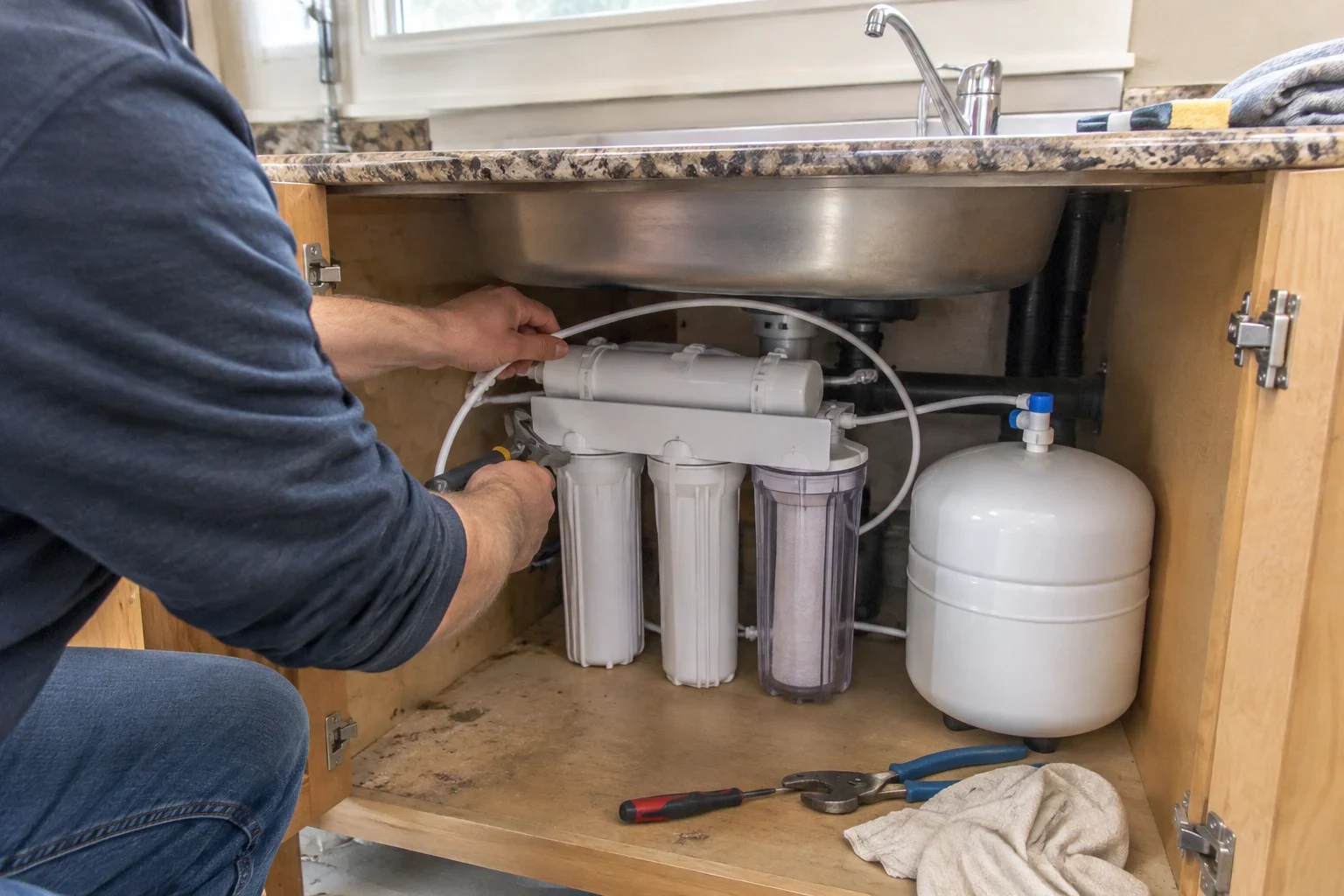
Reverse osmosis relies on the water pressure already in your lines. That pressure drives water against a semi-permeable membrane whose openings are smaller than a dissolved mineral ion. Water molecules get through. Calcium, sodium, lead, nitrates and most other dissolved solids do not, and they are flushed away to the drain. Upstream of the membrane, a sediment cartridge traps grit and a carbon stage takes out chlorine, which would otherwise attack the membrane. A final carbon polishing filter after the tank removes any flavor the stored water picks up.
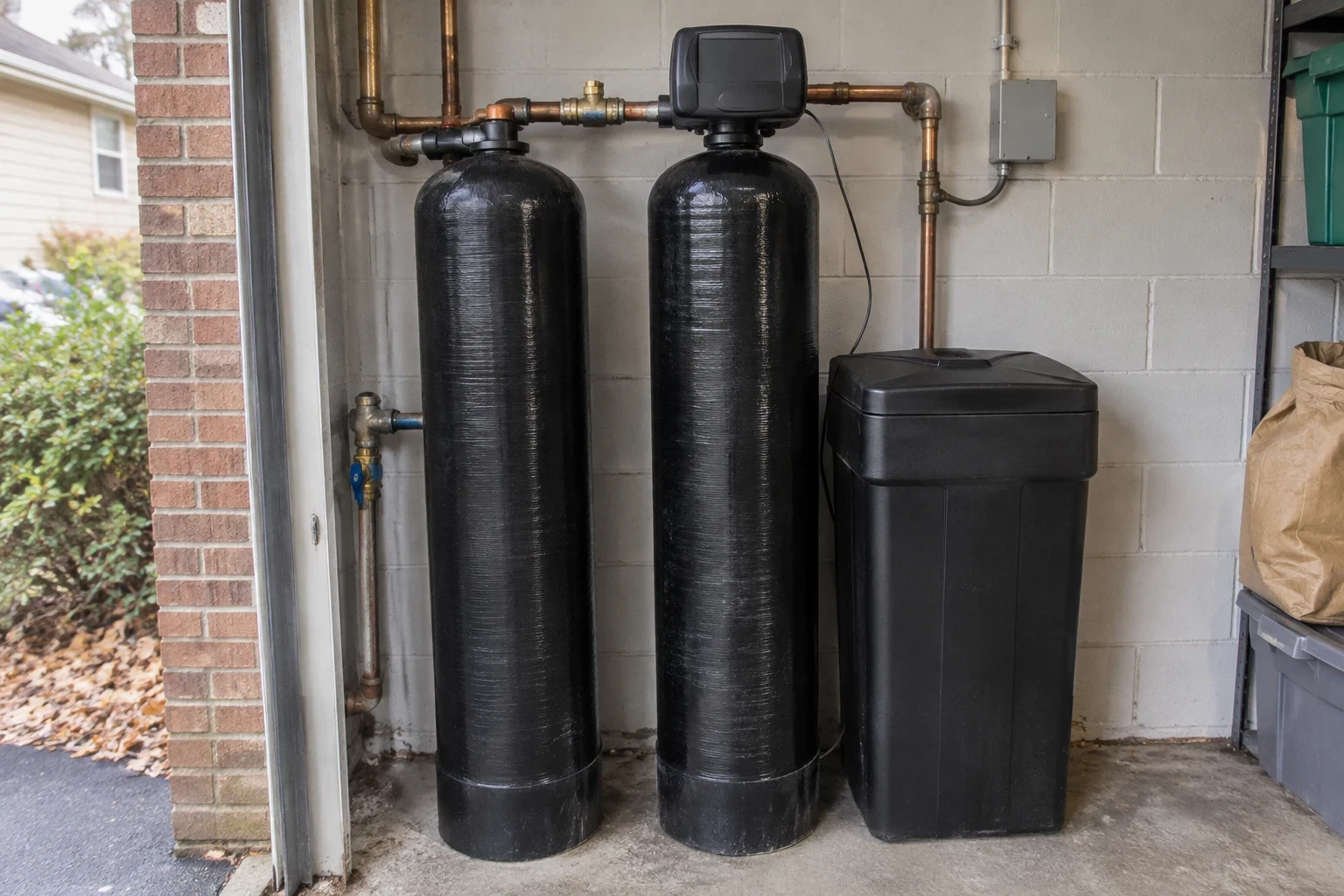
An RO unit produces a few gallons a day for drinking glasses, the coffee maker and the stockpot. It is not built to supply bathing or the washing machine. For treatment at every tap, start with our Whole-Home Filtration or Water Softeners pages instead. Many homes in the Hartland area draw hard well water, and that shapes how we plan an RO install, because minerals scale a membrane fast. We check what treatment sits ahead of the kitchen sink before choosing a system.
What comes with your RO system
Pre-filter housings
A sediment cartridge followed by a carbon block, mounted in the sink cabinet or on a basement wall. We leave room underneath so a cartridge change never means disconnecting tubing.
Membrane and storage tank
The membrane sits in its own housing and feeds a small pressurized tank that holds a few gallons. We set the air charge in the tank's bladder so the faucet runs at a steady flow, not a dribble.
Dedicated faucet
The RO faucet goes in an unused sprayer or soap dispenser hole if your sink has one. Otherwise we drill a new hole in the sink deck or the countertop.
Drain line and air gap
Reject water drains through a saddle clamped onto the sink tailpiece, above the P-trap. An air gap in that line stops dirty water from ever being drawn back toward the membrane.
Optional fridge or ice maker line
A tee can send RO water to your refrigerator too. Cubes made from it freeze clearer and stop leaving a chalky film in the ice bin.
When reverse osmosis is worth it
You keep buying bottled water
If the pantry or garage always holds a stack of plastic jugs and cases, a dedicated RO faucet replaces them. You fill a glass at the sink instead of hauling water home from the store.
Kettles and coffee makers coat with white scale
That crust is calcium and magnesium left behind as water boils off. RO pulls those minerals out of the water you heat, so coffee tastes cleaner and the machine lasts longer.
Well results flagged nitrates or other dissolved contaminants
Softeners and carbon filters do little against nitrates. A membrane is one of the few home systems that reduces them reliably.
Your home has older plumbing
Old solder joints and older brass fittings can shed lead into water that sits in the pipes. An RO unit at the kitchen sink treats the water you drink and cook with.
Cloudy ice and spotted glasses
Dissolved minerals leave hazy cubes and dried spots on drinking glasses. Water with fewer minerals clears up both.
From first call to first glass
- 1
Start with a phone call
Tell us where your water comes from, whether a softener or filter is already installed, and where you would like the faucet. We walk through financing and put together a free quote.
- 2
Checking the sink cabinet
We look at the cold-water stop valve, the drain tailpiece and how much room the cabinet has. When space is tight, we plan to mount the unit in the basement and bring a line up through the floor.
- 3
Installation
With the cold line closed off, we hang the filter housings, set the tank, install the faucet and hook up the supply, the drain and any refrigerator line. Apart from that one sink, your kitchen stays in use.
- 4
Flushing and handoff
We run the first tank or two to drain, which clears loose carbon dust and the preservative the membrane ships in. Then we point out each cartridge, explain its job and tell you when it needs replacing.
What sets the cost of a reverse osmosis install
Two RO units can look nearly identical in the cabinet and still land at different prices once we factor in your water and your kitchen. Your quote breaks out every component and every connection, so the total makes sense line by line. The quote holds for 30 days.
- Tank or tankless design
- A conventional unit with a storage tank is the lower-cost route. Tankless models carry an internal booster pump and cost more. A remineralization cartridge, which adds back a small amount of calcium for flavor, is one more stage on the bill.
- Water treatment ahead of the RO
- Hardness and iron both wear out a membrane early. If your water has either, putting a softener or iron filter in front of the RO can save money over the years, and we will tell you if that is the case.
- Where the unit is mounted
- Mounting inside the sink cabinet is the quickest job. Putting the unit in the basement and running tubing up to the kitchen or over to the refrigerator adds material and labor.
- Your countertop
- Laminate cuts cleanly with a standard bit. Granite and quartz call for a diamond core bit and a slower hand, so the faucet hole takes longer.
Common questions about reverse osmosis
Something not covered here? (262) 383-4599
How much water goes down the drain?
Every RO membrane needs a steady stream of reject water to carry off what it holds back. The amount depends on the membrane and on the pressure feeding it. Higher pressure gives a better ratio, which is why we measure your pressure before we pick a system.
Why does the tank fill slower in winter?
Cold water passes through a membrane more slowly, and water from a well or a buried main gets very cold in a Wisconsin winter. Production drops, but the tank still fills. We size the system with that seasonal slowdown in mind so you are not short on drinking water in January.
Do I need a softener before an RO system?
Not in every home. Hard water leaves scale on the membrane and shortens its service life. If you already have a softener, your RO unit benefits from it; if you don't and your water is hard, we lay out both options and the long-term cost of each.
How often do the filters change?
Plan on new sediment and carbon pre-filters about every twelve months, or sooner if your water carries grit. Fresh pre-filters are what keep the membrane working for years. You get a written change schedule matched to the cartridges in your system.
Can I spread out the cost, and when is it due?
We offer financing through U.S. Bank Avvance, on approved credit. Full payment comes at the completion of the install, not before. After you sign, you still have three business days to cancel.
Find out what an RO system costs for your kitchen
Tell us your water source and sink setup and we'll put together a free quote. We can walk you through financing on the same call.