ServicesWater Softeners
Water Softener Installation in Hartland
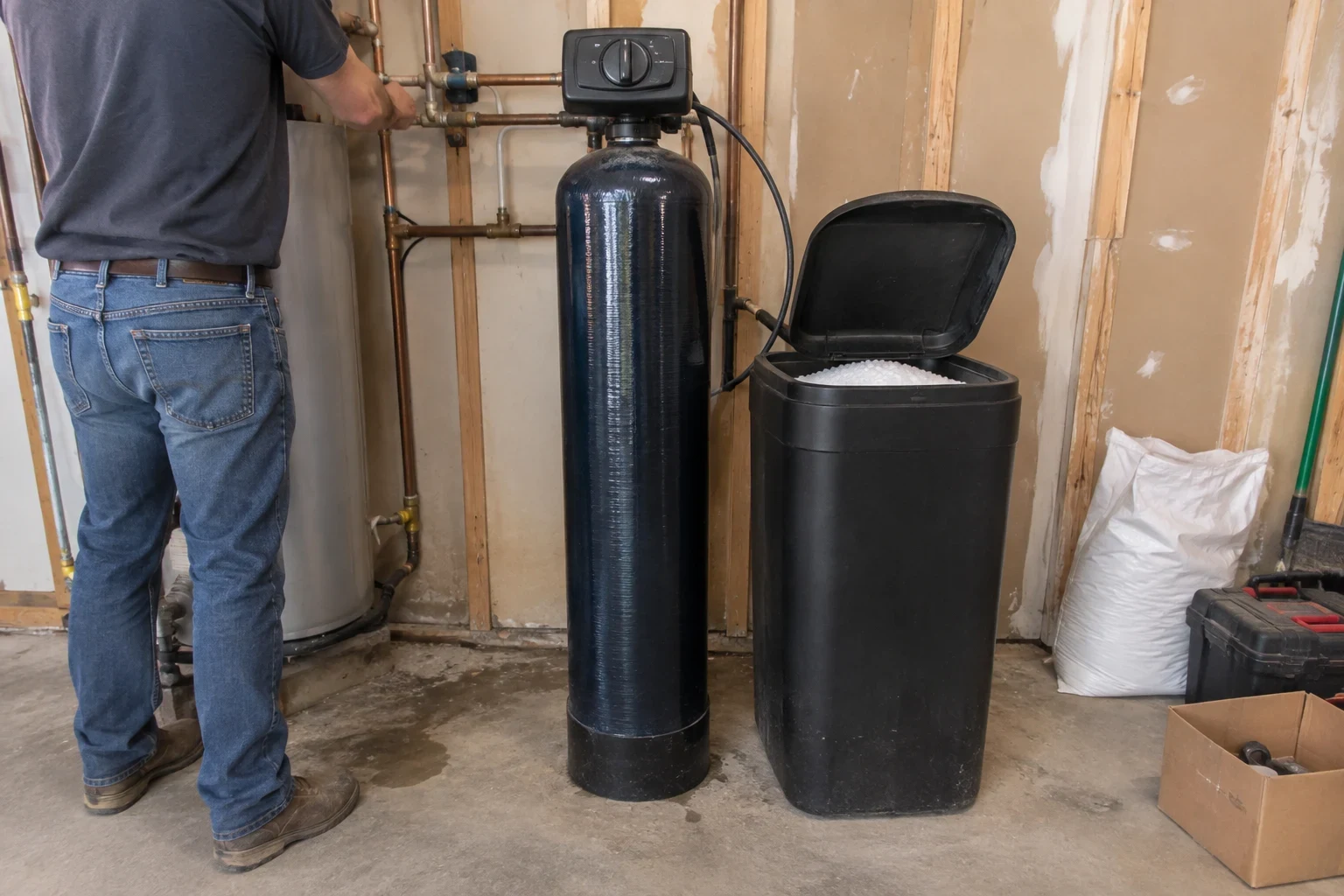
We install metered water softeners sized to your actual hardness, iron level and household use. They are plumbed in at the main with a bypass valve and an air gap drain, set up in a heated space, and programmed before we leave your home.
What a Softener Does and When It Fits
Inside the softener tank sits a bed of resin beads loaded with sodium or potassium ions. As water flows through, the beads pull out calcium and magnesium and release sodium or potassium in their place. Without those hardness minerals, scale stops collecting in your water heater, on faucet aerators and inside the dishwasher, and soap lathers instead of leaving a film. Most water around Hartland comes from wells drilled into limestone and dolomite, so hardness tends to run high on village water and private wells alike.
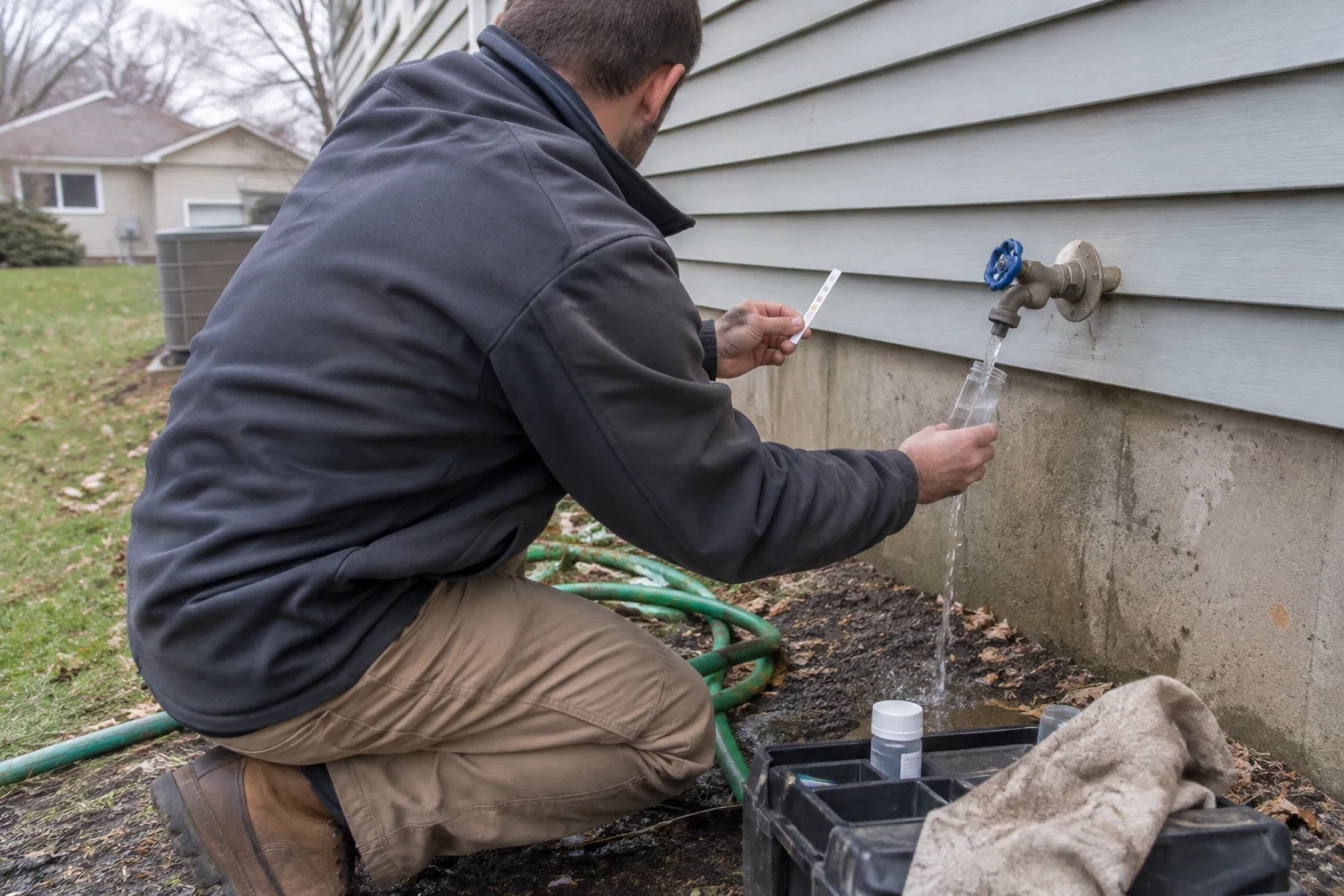
Size matters more than brand. An undersized unit regenerates too often and burns through salt. An oversized one lets the resin sit, and water channels through it without full contact. We size from your hardness and iron numbers, the number of people in your home and the pipe size at your main. Those numbers come from your utility's water quality report or a lab result you already have.
If your main complaint is chlorine taste or what is in your drinking glass, a softener will not fix it. Reverse osmosis or whole-home filtration is the better match, and we will tell you that on the phone.
What the Install Includes
- 01
Metered control valve
The valve tracks the gallons you use and starts a regeneration only when the resin is near capacity. A clock-based valve recharges on fixed days no matter how much water went through it, and that burns extra salt and water.
- 02
Resin tank and brine tank placement
Both tanks go on a level floor in a heated space near the main. A cracked valve body or a frozen brine line is the usual result of a softener set in an unheated garage.
- 03
Bypass valve and plumbing at the main
We cut in a bypass so you can switch to raw water for service or a leak. The softener goes after the meter or pressure tank and ahead of the water heater. Outdoor spigots can stay on hard water so you are not paying to soften lawn water.
- 04
Drain line with an air gap
Regeneration water runs to a floor drain or standpipe, and the end of the hose stops short of the drain opening. That open space means rinse water from the drain side has no path to be drawn back up into the unit.
- 05
Startup and removal of the old unit
We program the hardness setting, fill the brine tank and run the first regeneration. If an old softener is in place, we disconnect it and haul it out.
Questions about Water Softeners?
Call(262) 383-4599Signs Your Home Needs a Softener
White crust on fixtures
Chalky buildup on showerheads, aerators and faucet bases is calcium carbonate left behind as water evaporates.
Popping sounds from the water heater
Scale settles as a hard crust on the floor of the tank and seals small amounts of water under it. When the burner fires, that trapped water boils up through the crust, which is the rumbling you hear, and the heater spends more fuel making the same amount of hot water.
Spotted glasses and stiff laundry
Hard water binds with detergent, so dishes come out cloudy and towels feel rough even when you add more soap.
An old softener that stopped using salt
A salt bridge in the brine tank, a failed injector or resin fouled with iron can all stop regeneration. Orange staining is a hint that iron is part of the problem, and heavy iron on a private well may call for well water treatment ahead of the softener.
How the Job Runs
- 1
The phone call
We ask for your hardness and iron numbers, your water source (village supply or a private well), how many people live in your home and where the water line enters. You get a free quote and financing information on the same call, and the quote holds for 30 days.
- 2
Install day at the main
We shut off the water, lay down floor protection and cut the bypass into your main line. Copper, PEX and older galvanized lines each need different fittings, so we bring what your plumbing calls for. Where your municipality requires a plumbing permit, we handle it.
- 3
Drain, brine and first regeneration
We run the drain line to the air gap, connect the brine line and program the valve. Then we run a regeneration cycle and check every joint for leaks under pressure.
- 4
Walkthrough and payment
We show you how to add salt, how to work the bypass and what the valve display means. Full payment is due when the install is complete, not before.
What Moves the Price
Every quote is built from your water and your plumbing, so two homes on the same street can land in different places. The biggest drivers are listed below. If you would rather spread the cost out, financing is offered through U.S. Bank Avvance, on approved credit. We go over how it works during the same phone call as your quote.
- Hardness and iron level
- Higher hardness means more grain capacity and more resin. Iron fouls standard resin over time, so higher iron may call for fine-mesh resin or a separate iron filter.
- Plumbing at your main
- Pipe size and material change the fittings and labor. Some homes already have a builder-installed softener loop, which shortens the work.
- Drain access and location
- A floor drain a few feet away is simple. A long drain run or a finished basement adds time and material.
- Valve and tank setup
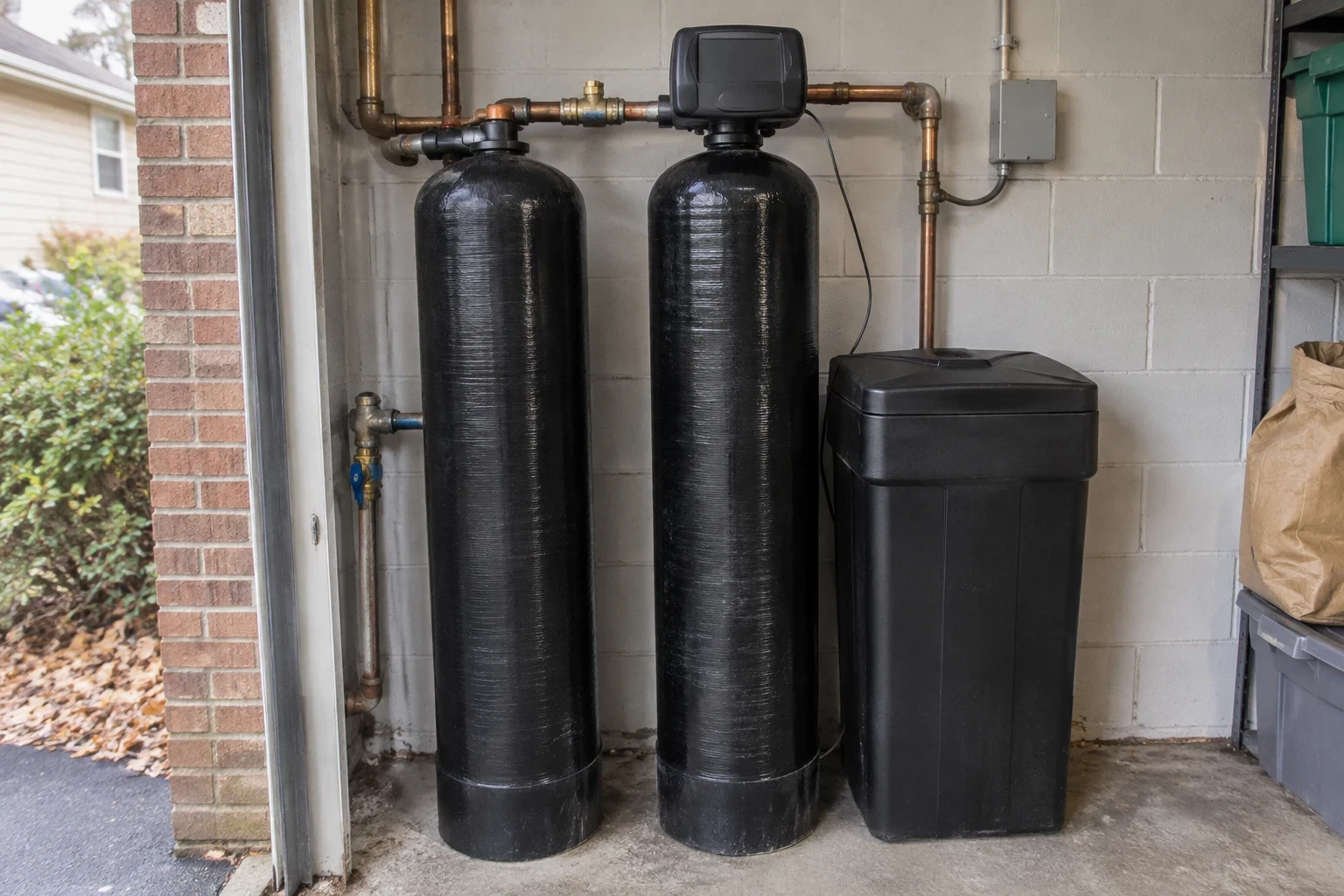
- A single-tank metered valve suits most homes. Larger households or very hard water may justify a twin-tank system that always has a charged tank online.
Water Softener Questions
I'm on village water. Do I still need a softener?
Often, yes. Municipal water in this part of Waukesha County comes from wells and is commonly hard enough to leave scale. Your utility's annual water quality report lists the hardness number, and we size the softener from it.
Should I use sodium or potassium salt?
Sodium chloride is the less expensive choice and works well in nearly every softener. Potassium chloride keeps sodium out of your water, though the bags are pricier and the valve generally needs a higher salt dose to do the same work. We can set the valve for either one.
Will a softener get rid of iron or a rotten egg smell?
A softener removes small amounts of dissolved iron along with hardness, but too much iron fouls the resin. A sulfur smell comes from hydrogen sulfide, which a softener does not treat. Those problems belong to well water treatment.
Can the softener go in my garage?
Only if the garage stays heated all winter. Freezing cracks the control valve and the brine line, so we usually place it in the basement near the main.
Can I back out once I've signed the contract?
Yes. You can cancel within three business days of signing. Before you sign at all, your quote stays good for 30 days, so there is time to think it over.
Find Out What a Softener Takes in Your Home
Tell us your hardness number, your water source and where the main comes in. We will walk you through a free quote and the financing options on the same call.